
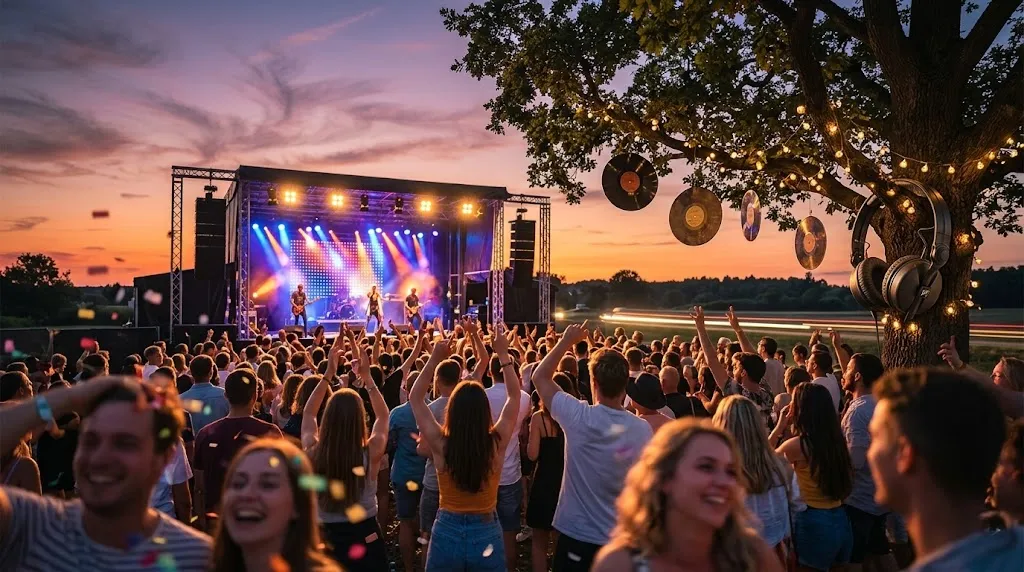
From Songs to Memories: The Soundtrack of Life’s Best Moments
Everybody has a song that stops them mid-step, takes them back in time, and brings back forgotten feelings. Songs and memories are inseparable. Music has a rare ability to encode moments so deeply into our minds that a single melody can instantly replay an entire chapter of our lives.
From a first dance at a wedding to a school farewell party, from a lullaby that calmed childhood fears to a song that helped you through heartbreak, music isn’t just background. It becomes the background.
This post explores the emotional connection between music and memories, why certain songs feel like time machines, and how a well-crafted personal soundtrack can make life’s best moments truly unforgettable.

Key Takeaways
- Music memories are more vivid and lasting because they activate the brain’s emotional and memory centers simultaneously.
- When emotions are high, musical anchors are strongest. Songs played at weddings, goodbyes, heartbreaks, and parties are “bookmarked” by the brain and can bring back those emotions years later.
- The most lasting effects of music are felt between the ages of 12 and 25. Those songs are likely to still move you deeply many years from now.
- Songs about your life’s biggest events tell your story more honestly than anything else. Curating them requires emotional awareness.
- At large parties, who’s behind the decks and how well they read the room can make or break the night.
- Start with the emotion you want to evoke, balance familiar and new, know your audience, and never underestimate a well-timed transition.
Why Are Songs and Memories So Deeply Connected?
Music and emotional memory are neurologically linked. When we hear music, multiple brain regions activate simultaneously: the auditory cortex processes the sound, the limbic system triggers emotions, and the hippocampus lights up to retrieve associated memories. This multi-region activation is what makes music memories so vivid and long-lasting compared to ordinary recollections.
Emotional songs tend to create the strongest imprints. Music psychology research shows over and over that songs heard during strong emotional states (like happiness, sadness, love, or fear) become anchors for those feelings. The brain essentially “bookmarks” the music alongside the feeling, creating an instant recall mechanism that can be triggered years or even decades later.
This is why a song from a decade-old road trip can make you smell the sunscreen and feel the wind through the window. Music and emotions don’t just make you remember something; they rebuild it.
Life’s Milestones and Their Music
Certain life moments almost demand a soundtrack. We instinctively reach for music during weddings and ceremonies, birthday and anniversary celebrations, graduation parties and farewells, festival nights and cultural gatherings, and quiet evenings that somehow become unforgettable.
When it comes to important events in life, the right music doesn’t just fill the void; it makes the moment more memorable. Think about any wedding you’ve attended. You probably remember the songs more than the menu or the decor. Songs for wedding ceremony, like a soft ballad during the vows or a lively Bollywood number that gets everyone on the dance floor, become an important part of the celebration.
This is why choosing suitable songs for wedding is one of the most important decisions a couple makes. The right song can transform a beautiful moment into a legendary one.
The Science of Nostalgia: How Does Music Shape Memories?
Music is the best way to feel nostalgic, that bittersweet longing for the past. Psychologists describe music-induced nostalgia as one of the most emotionally rich human experiences. When we hear a track connected to our past, we don’t just remember an event; we feel it again.
The Reminiscence Bump
Songs heard between the ages of 12 and 25 are disproportionately powerful in triggering emotional memories later in life. This period is when intense emotional and identity development occurs and music memories form most deeply. The tracks you loved in your teens will likely move you just as strongly in your 40s.
Involuntary Musical Imagery
When a song pops into your head out of the blue, it can bring back memories and feelings. This involuntary recall is a sign of how effectively music encodes experience into long-term memory.
Music as Emotional Anchor
We often unconsciously use music to “lock in” important moments. When we listen to the same song over and over again when we’re feeling good or when we think of a loved one, that song becomes an emotional anchor that helps us get back to that good mood whenever we need to.
Creating Your Personal Soundtrack
A personal soundtrack is more than a playlist. It’s a curated collection of songs that define who you are, where you’ve been, and what matters most. Your life soundtrack songs might include the song playing when you fell in love, a track that helped you through a difficult time, the anthem of a friendship group, a childhood favorite that still makes you smile, or a song you discovered recently that already feels timeless.

Sharing music at events means more than just playing songs; you might be writing the music for someone else’s movie. That’s a beautiful responsibility.
Music for Celebrations: From Intimate Moments to Grand Events
Not all memorable music moments happen quietly. Some of the most powerful songs connected to memories are the ones that filled a dance floor, rattled the speakers at a festival, or got everyone in the room singing at the same time.
Whether you’re looking for trending songs 2026 for an upcoming celebration or curating the perfect atmosphere for an intimate gathering, the principle is the same: the right music at the right moment creates lasting memories.
In India, the DJ is often what makes the difference between a good event and a legendary one. This is true for weddings, sangeet nights, corporate events, and festival parties. A skilled DJ doesn’t just play music; they read the room, build energy, and craft the emotional arc of the evening.
Songs That Tell Stories: The Power of Lyrics and Emotion
Beyond rhythm and melody, lyrics give songs a narrative power that few other art forms can match. A well-written song can make something about being human that everyone can relate to, like love, loss, joy, or longing, feel completely different to each person who hears it.
Songs that tell stories create emotional music playlist that people return to again and again. Remember those songs that have been anthems for generations? The ones that make you feel something even if you can’t explain it. These are the songs remembered for years, the ones that outlive trends because they speak to something deeper and more enduring.
An emotional connection through music is one of the most profound forms of human connection. When two people discover they love the same song, they feel understood in a way that words alone rarely achieve.
Building a Music Memories Playlist for Life’s Key Moments
Whether you’re a professional event planner or simply someone who wants the perfect atmosphere for a gathering, building a music-memories playlist is both an art and a science.
Start with the emotion, not the song. Figure out how you want people to feel and work backwards from there. Mix timeless classics with fresh tracks, since familiar songs ground people while new songs create new memories. Consider your audience carefully, because a multigenerational wedding crowd needs different energy than a college reunion. Pay attention to transitions, since the gap between songs is as important as the songs themselves. Do not plan everything, because the best musical memories often come from songs that no one expected. If you’re planning something special in Rajasthan, connecting with the best DJ in Udaipur could be the single best decision you make for your event.
Why Is Music the Truest Soundtrack of Life?
We photograph moments to preserve them visually. We journal to capture thoughts. On the other hand, music does something that nothing else can. It captures the feeling of a moment more accurately and instantly than anything else.
The soundtrack of life isn’t just background noise. It’s the emotional structure of our lives, the thread that ties together who we were and who we are now. When we talk about Music for life events, we’re really talking about music’s ability to make us feel fully alive in the moment and deeply connected to it forever after.
Every song that you remember from a special event in your life becomes a permanent part of you, whether it was a quiet song you found by yourself at midnight or a loud anthem that made everyone dance. It sits in your memory, ready to be recalled the moment a familiar chord strikes. That’s not just entertainment. That’s legacy.
DJ Moskitto, one of the most sought-after names in the events circuit, has built a reputation for doing exactly that. Whether it’s mixing the top 20 Bollywood party songs into a seamless celebration or crafting a deeply personal wedding set, DJ Moskitto transforms events into experiences.
Frequently Asked Questions
How do songs become connected to our memories?
Songs become connected to memories through a neurological process where music activates both the brain’s emotional centers and its memory regions simultaneously. When a song plays during a significant event, the brain connects it to that event. Hearing the song again almost instantly brings back the memory and feelings.
Why does music remind us of special moments?
Music reminds us of special moments because of how deeply it’s encoded in emotional memory. Unlike visual or verbal memories, music-triggered memories often carry the full emotional weight of the original experience, making them feel vivid and immediate even years later.
What types of songs create the strongest memories?
Songs that make you feel strong emotions at important times in your life, like weddings, graduations, or farewells, tend to be the ones that you remember the most. This is especially true for songs you discovered between the ages of 12 and 25.
How does music influence emotions and nostalgia?
Music directly engages the brain’s limbic system, triggering genuine emotional responses to sound. Music is a great way to feel nostalgic because hearing a familiar song doesn’t just bring back memories; it also makes you feel the way you did when you first heard it.
Why is music considered the soundtrack of life?
Music is considered the soundtrack of life because it naturally accompanies every significant human experience. This type of art better captures and holds on to the feeling of a moment than any other. This makes it the most personal and lasting record of a life lived.

DJ Moskitto is a seasoned DJ with over 10 years of experience, known for creating electrifying atmospheres at events of all kinds. His mastery in mixing and ability to read the crowd makes him a sought-after name in the entertainment industry.
